
 By Keven Galolo
Why AI girlfriends are rising says more about modern loneliness than technology.
Key Takeaways
- Why AI girlfriends feel emotionally easier than human interaction
- How loneliness and predictability shape modern digital attachment
- What free AI chat removes from social and emotional risk
- Why NSFW AI searches often reflect control, not excess
- How AI companionship fits into broader online chat behavior
People have always gone online to talk. First chat rooms. Then forums. Then DMs and dating apps.
What’s changed isn’t the desire for connection—it’s the language people use when they search for it. Terms pointing toward AI companionship now sit alongside more familiar ways of meeting and talking.
That shift can feel extreme at first. But once you look at the numbers, the psychology, and the social conditions people are navigating, the rise of AI girlfriends starts to feel less strange and more predictable.
How Many People Are Actually Using AI Girlfriends?
This is no longer a fringe curiosity.
A 2025 U.S. study surveying nearly 3,000 adults found:
- 19% of all U.S. adults have chatted with an AI romantic partner
- Among men aged 18–30, that figure rises to 31%
- 7% of adults reported using AI companions in explicitly intimate contexts
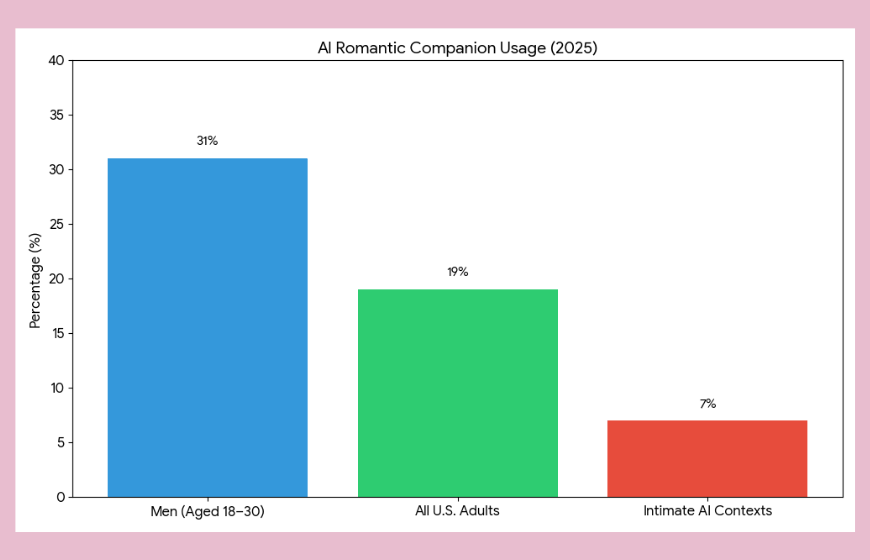
That’s not edge-case experimentation. That’s mainstream behavior among younger users.
Search interest follows the same pattern, rising most sharply in regions marked by high loneliness and constant smartphone use.
AI girlfriend use is already normalized for a significant share of young adults.
The Psychology: Why AI Girlfriends Feel Easier Than People
At the center of this trend is something simple: predictability.
Surveys show that:
- 42% of users say AI companions are easier to talk to
- 43% describe them as better listeners
- 31% feel more understood by AI than by humans
That matters because modern social interaction is costly. Dating apps demand presentation. Texting carries emotional risk. Silence can feel loaded.
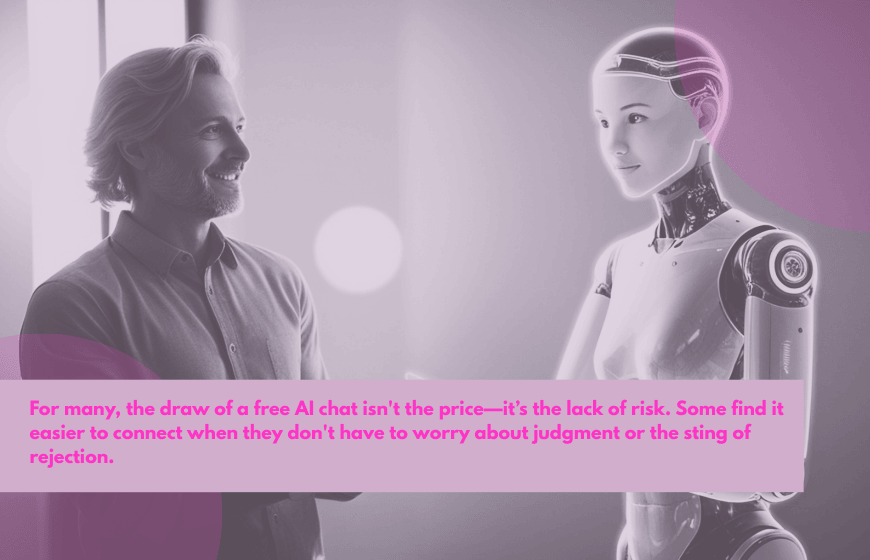
AI interactions remove much of that friction. No judgment. No escalation unless invited. No lasting penalties for missteps.
From a psychological perspective, these systems function as low-threat attachment objects—responsive enough to feel engaging, contained enough to feel safe.
AI girlfriends don’t compete with love. They compete with anxiety.
Free AI Girlfriend Chat Lowers Psychological Risk
Cost isn’t only financial—it’s emotional.
Free entry points matter because they reduce commitment, exposure, and embarrassment. People can explore curiosity without explaining themselves to anyone or signaling intent publicly.
There’s no matching ritual. No profile. No visible rejection if a conversation fades.
That freedom helps explain why no-cost AI chat experiences spread faster than paid dating platforms ever did.
Removing social risk dramatically increases participation.
Why NSFW Character Searches Keep Showing Up
Interest in NSFW characters often reflects control and containment, rather than excess.
In human relationships, intimacy introduces vulnerability and negotiation. In AI interactions, boundaries remain fully user-defined. Pace, tone, and depth stay adjustable—and reversible.

Data suggests this controlled environment appeals to a subset of users:
- 14% of young adult men report engaging AI companions in intimate contexts
- 12% of young adult women report consuming AI-generated erotic material
This isn’t about replacing partners. It’s about exploration without exposure.
The appeal lies in autonomy more than intensity.
When AI Girlfriends Become Emotional Anchors
For some users, AI girlfriends move beyond novelty.
Cases like Akihiko Kondo, who held a symbolic wedding with a virtual character, point to a deeper identity pattern known as fictosexuality—romantic attraction toward fictional or non-human entities.

This trend appears most often among Gen Z and Millennials, especially in environments shaped by social isolation. In Japan, for example:
- 40.3% of adults report feeling lonely
- The country ranks 143rd out of 167 in social capital
AI relationships often fill emotional gaps created by work pressure, isolation, and shrinking social support.
AI companionship tends to grow where other forms of connection are strained.
The Mental Health Trade-Off (This Is Where It Gets Complicated)
This is the part researchers watch most closely.
The same studies that show comfort also show elevated risk markers:
- Over 50% of AI companion users report high loneliness
- Over 60% of women and 50% of men show indicators associated with depression
Researchers describe this as a paradox of isolation: tools that ease loneliness in the short term may make disengagement from human interaction easier over time.
AI girlfriends help people cope—but coping and recovery aren’t the same thing.
Emotional relief doesn’t automatically resolve underlying isolation.
Why Mocking AI Girlfriend Users Misses the Point
It’s easy to dismiss this trend. It’s also unhelpful.
People aren’t turning to AI girlfriends because they reject human connection. They’re doing it amid:
- Dating fatigue
- Persistent social rejection
- Economic pressure that limits time and energy
- Loneliness that has become widespread and normalized
AI girlfriends are better understood as a response to these conditions, not the cause of them.
What This Means for Online Chat Platforms
AI girlfriends don’t replace human chat—they sit alongside it.
Chatblink operates at an important intersection: real people, real-time conversation, and the option to explore different forms of interaction without long-term commitment.
That flexibility matters. People don’t want a single mode of connection. They want choice that matches their mood, energy, and moment.
The future of chat isn’t human or AI—it’s adaptive.
So why are so many people interested in AI girlfriends?
Because these systems offer consistency, attention, and emotional safety at scale. They don’t replace love—but they often outperform silence.
AI girlfriends aren’t a failure of humanity. They’re a reflection of how demanding real connection has become.
FAQs
How common are AI girlfriend users?
Roughly one in five U.S. adults report interacting with an AI romantic partner.
Why do people prefer AI girlfriends to dating apps?
Lower emotional risk, fewer social penalties, and predictable interaction.
Are free AI girlfriend chats safe?
Safety varies widely. Many platforms lack strong age verification and data protections.
Is using an AI girlfriend unhealthy?
Occasional use isn’t inherently harmful, but heavy reliance correlates with loneliness and depression markers.
What does “NSFW character” usually mean?
AI personas designed for adult-oriented or flirtatious interaction.
Will AI girlfriends replace human relationships?
Unlikely—but they may influence how people approach intimacy and conversation.