
 By Keven Galolo
For years, people treated offline dating as the gold standard and online dating as the backup plan. The ideal story was always the same: meet naturally, talk in person, and let things develop without screens getting involved. Dating apps were often framed as something people used only if real life did not work out.
But if you actually listen to how many Gen Z adults talk about dating today, that old hierarchy does not seem to match reality anymore.
A growing number of people are saying something that sounds controversial at first: dating offline is honestly worse than online.
Not worse in every situation, and not impossible to succeed in—but harder than people expect.
That shift does not mean Gen Z dislikes human interaction or prefers living online. It reflects a practical change in how people meet, communicate, and build relationships. For many young adults, offline dating no longer feels natural or spontaneous. Instead, it often feels uncertain, inconvenient, and surprisingly inefficient compared to digital alternatives.
At the same time, online dating—which people love to criticize—quietly became one of the most common ways people actually meet.
So the question is worth asking: why does offline dating feel harder for so many people today?
Gen Z Dating Works Differently Than Previous Generations
A lot of dating advice still comes from a world that looked very different socially.
Older generations often describe dating as something that happened naturally through school, work, church, community events, parties, or expanding friend groups. Meeting new people was built into everyday life, which meant dating opportunities appeared more often without deliberate effort.
That environment looks different for Gen Z.
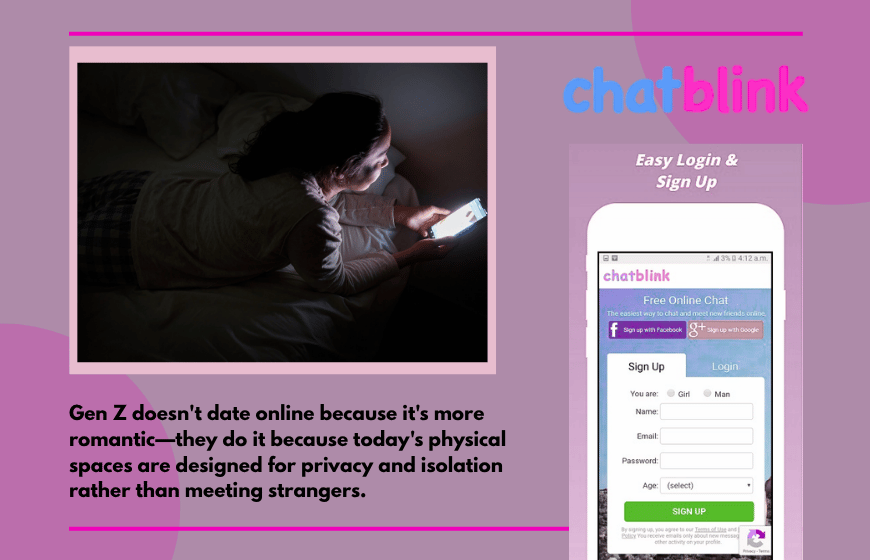
People spend more time online, work remotely, maintain smaller social circles, and spend more of their free time in private rather than public spaces. Even when people go out, many environments are not designed for meeting strangers anymore. Coffee shops became workspaces. Gyms became personal zones. Social groups often stay contained instead of constantly growing.
As a result, meeting someone offline can feel surprisingly difficult.
This is one reason Gen Z relationships increasingly start online. Dating apps did not create the shift by themselves—they adapted to behavior that was already changing.
When people say online dating feels easier, they are often reacting to this reality rather than claiming apps are more romantic.
The Challenges of Offline Dating Go Beyond Confidence
People often reduce offline dating problems to confidence.
The advice usually sounds simple: talk to more people, go outside, approach someone attractive.
That sounds useful until you actually try doing it.
Offline dating comes with layers of uncertainty that people sometimes underestimate. You do not know whether someone is interested in dating. You do not know whether they are available. You do not know whether they want conversation in that moment at all.
Modern social norms add another layer.
Many Gen Z adults are more aware of personal boundaries and social comfort than previous generations were. That awareness is generally positive, but it also means people are more cautious about approaching strangers. Some avoid initiating conversations not because they are shy but because they do not want to make someone uncomfortable.
Online dating removes much of that uncertainty.
When somebody creates a dating profile, there is already an understanding that interaction is welcome. That changes the entire experience before the first message is even sent.

Connect Instantly with People Worldwide!
Join thousands of conversations happening right now. Chat anonymously and discover exciting chat rooms.
The Online Dating Advantages People Rarely Admit Out Loud
People complain about dating apps constantly, but their continued popularity suggests something important: they solve real problems.
One major online dating advantage is clarity.
Offline interaction often starts with uncertainty. Online dating removes part of that equation because everyone enters the space with similar intentions. You already know the other person is at least open to conversation.
Another advantage is access.
Offline dating limits people to existing routines and social circles. If your weekly life consists mostly of work, commuting, and spending time at home, your opportunities naturally stay small. Dating apps expand that pool immediately.
There is also the communication factor.
Not everyone is naturally charismatic in person. Some people think more clearly when they have time to respond. Online interaction allows people to express themselves differently and sometimes more honestly than they would face-to-face.
That does not mean online dating is better at creating relationships.
But it helps explain why so many dating experiences today begin digitally instead of offline.
Why People Still Feel Frustrated With Online Dating
If online dating solves so many problems, why do people complain about it constantly?
Because convenience creates different challenges.
More access means more comparison. More matches can lead to more indecision. Conversations become easier to start and easier to abandon.
People talk about burnout, ghosting, unrealistic expectations, and feeling invisible.
Communities that discuss modern dating dynamics—including conversations connected to the Purple Pill community—often point to the same observation: technology increased opportunities, but it did not automatically make relationships easier.
It simply changed where the difficulty happens. Offline dating creates friction before interaction. Online dating creates friction after interaction. Understanding that difference helps explain why so many people feel conflicted about both.
FAQ
1. Why does offline dating feel harder for Gen Z?
It comes down to uncertainty. In person, you don’t know if a stranger is single, what they are looking for, or if they even want to be bothered. Online dating eliminates that guessing game.
2. How have social spaces changed for dating?
Public places aren’t built for mingling anymore. Coffee shops have turned into quiet workspaces, gyms are personal zones, and people generally spend more time in smaller, private social circles.
3. Why is Gen Z hesitant to approach people in public?
Younger adults are highly conscious of personal boundaries. Many avoid approaching strangers because they are worried about making the other person feel uncomfortable or unsafe.
4. What is the main benefit of online dating apps?
Clarity and access. Apps instantly expand your dating pool beyond your daily routine, and everyone on the platform enters the space with the exact same intention: to connect.
5. If online dating is easier, why does everyone complain about it?
Because it shifts where the trouble happens. Offline dating makes it hard to start a conversation (friction before). Online dating makes it easy to start, but leads to ghosting, choice paralysis, and burnout (friction after).
6. Does Gen Z just prefer living online? No. The shift isn’t about a dislike for human touch—it’s a practical reaction to a world where meeting people organically has become logistically difficult and inefficient.