
 By Keven Galolo
You keep trying different apps, but none of them seem to lead anywhere real.
The best platforms to make friends are those that match people through shared interests, location, or intent. Each serves a different social need, from casual chats to structured in-person meetups, making the choice dependent on how you prefer to connect.
Like many aspects of modern life, friendship has shifted online—fast, filtered, and often intentional. Platforms built specifically for connection now sit alongside traditional social media, offering tools designed not for followers, but for conversation. Some prioritize proximity; others, shared hobbies or identities. The result is a fragmented but rich ecosystem of options.
Still, the question lingers: where do you actually start?
Not all platforms work the same. Some feel transactional. Others, surprisingly personal. And a few—when used well—can lead to something rare in adulthood: genuine, lasting friendship.
Best Platforms to Make Friends
1. Chatblink
Fast, Low-Pressure Conversations
Built for immediacy, Chatblink removes most of the friction that slows people down. You can enter chat rooms quickly, start conversations with strangers, and decide later how much of yourself to share.
Chatblink — a browser-based chat platform — allows users to meet new people through text chat, public rooms, and private messaging, with both optional registration and limited guest access. It does not require a polished profile to begin, but signing up unlocks more consistent features and identity.
That hybrid model shapes the experience. Users can explore casually at first, then transition into more stable interactions once they create an account. The platform supports random chats, group discussions, and user discovery through its active member listings.
Still, the structure leans toward spontaneity. Conversations happen fast. Connections can feel temporary.
A starting point, not a system.
2. Meetup
Structured Socializing Through Shared Activities
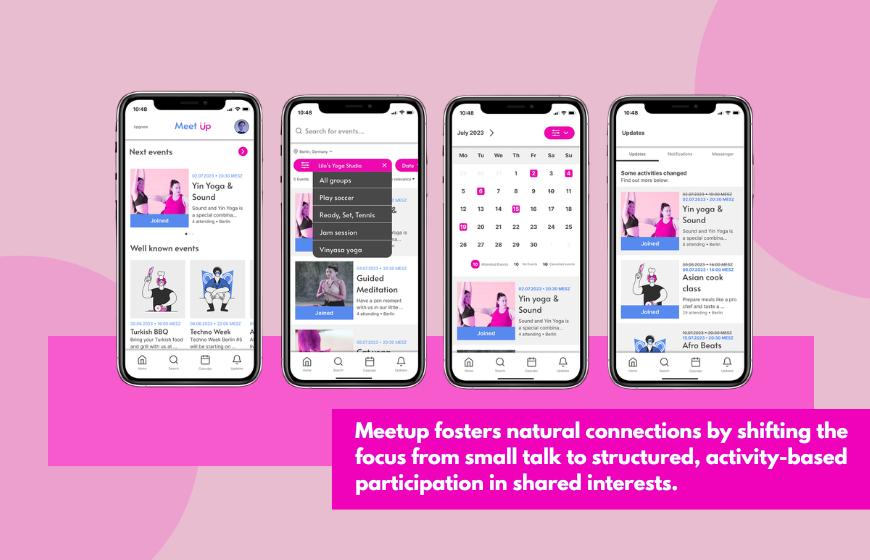
Unlike chat-first platforms, Meetup begins with an activity. You join groups based on interests, then meet people through events tied to those interests.
Meetup — a platform for organizing and attending group events — connects users through shared activities like fitness, tech, language learning, and social meetups. It shifts the focus away from small talk and toward participation.
That difference matters. Conversations tend to flow more naturally when there is something happening in the background. A walk, a workshop, a discussion.
For adults, especially those new to a city, Meetup offers structure. You are not guessing how to socialize. You are showing up.
3. Bumble For Friends
Intentional One-on-One Matching
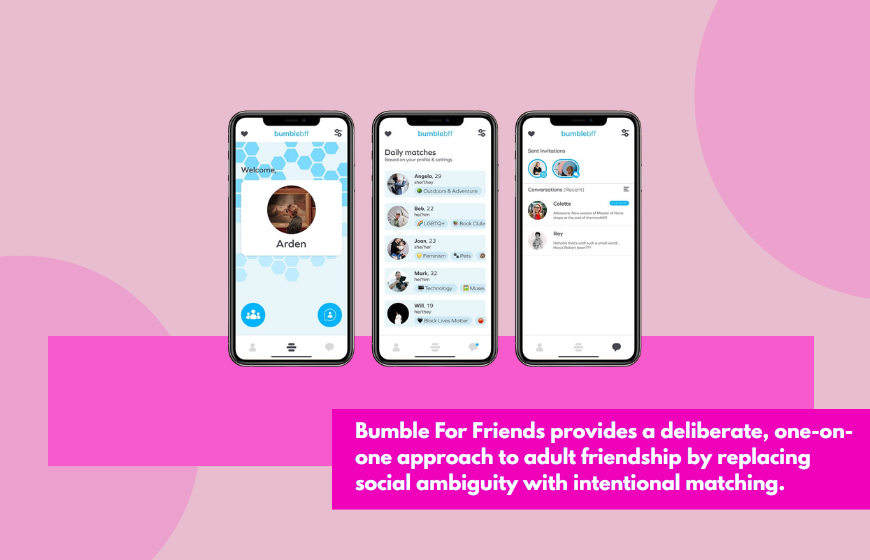
Designed specifically for platonic connection, Bumble For Friends removes the ambiguity found on general social platforms. Everyone is there for the same reason.
Bumble For Friends — a friendship-focused matching app — allows users to swipe through profiles, match based on mutual interest, and start conversations within a structured chat system. It mirrors dating apps in format, but not in intent.
This makes interactions more deliberate. You choose who to engage with. You build one conversation at a time.
For users who prefer clarity over randomness, it offers a controlled path into adult friendships.
4. Discord
Communities First, Conversations Second
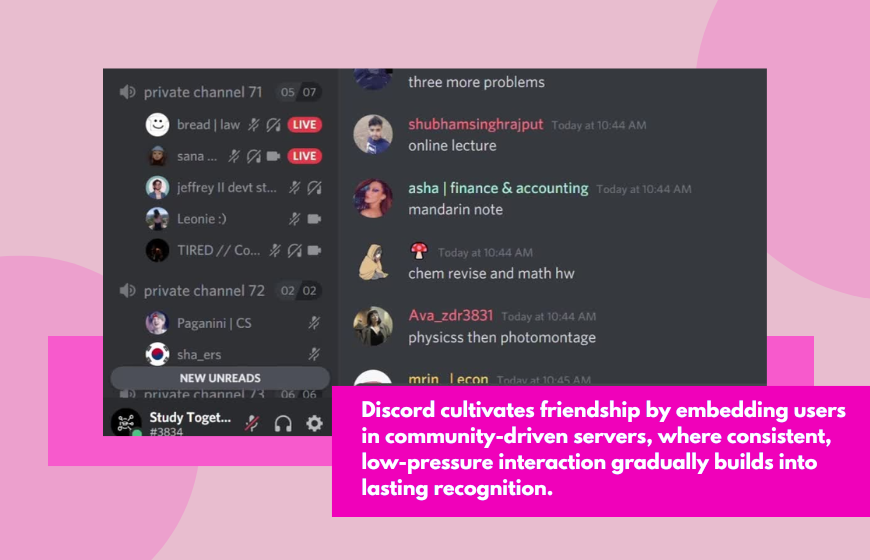
Discord approaches friendship from a different angle. You do not start with individuals. You start with a community.
Discord — a server-based communication platform — organizes users into topic-driven spaces where conversations happen continuously across text and voice channels. Each server centers on a shared interest, from gaming and tech to books and productivity.
This structure reduces pressure. You join a discussion already in motion, contribute when ready, and gradually become familiar.
Over time, repeated interaction builds recognition. Then, connection.
5. Facebook Groups
Scale and Familiarity
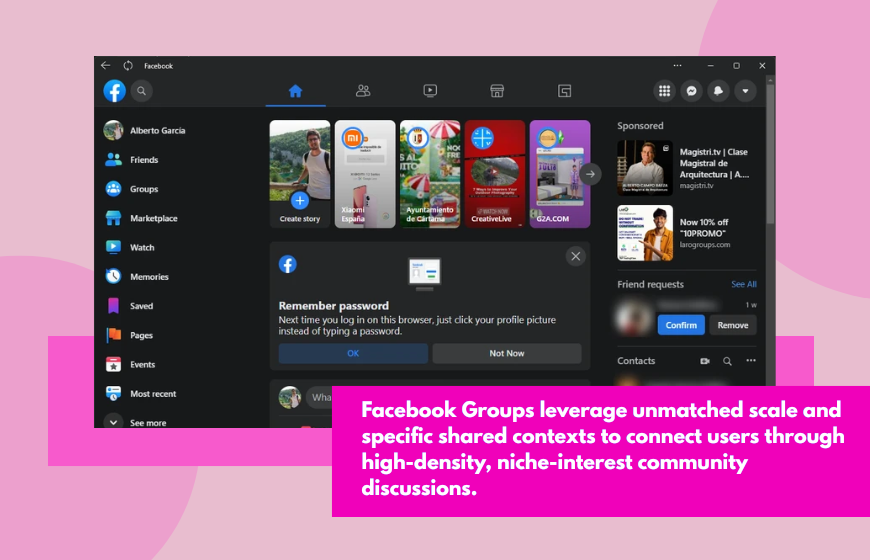
Large, established, and often overlooked, Facebook Groups remain one of the most practical tools for meeting people with shared contexts.
Facebook Groups — community spaces within Facebook — allow users to join discussions centered on location, identity, hobbies, or life stages. The scale is unmatched, which increases the chance of finding highly specific communities.
That density is the advantage. There is usually a group for exactly what you need.
The experience varies, though. Some groups are active and welcoming. Others are quiet or cluttered.
Consistency depends on the community.
6. Geneva
Small Communities, Real-World Focus
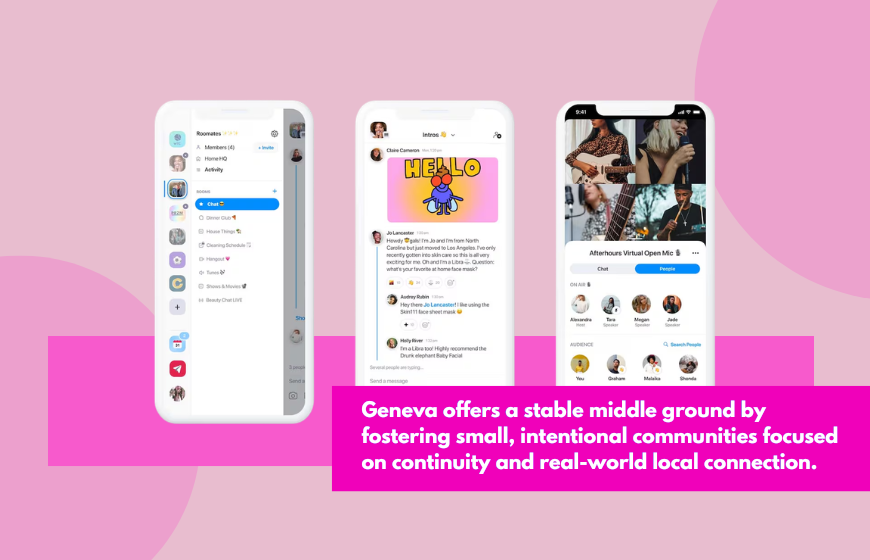
Positioned between chat apps and event platforms, Geneva focuses on building smaller, more intentional communities.
Geneva — a community-based social app — allows users to join or create groups, chat in real time, and organize meetups within those groups. It is designed to help people find others in their city or shared interest space.
The emphasis is on continuity. Conversations do not reset. Communities persist.
For users seeking something more stable than random chat, but less formal than large platforms, Geneva offers a middle ground.
7. Reddit
Interest-Driven, Indirect Connection
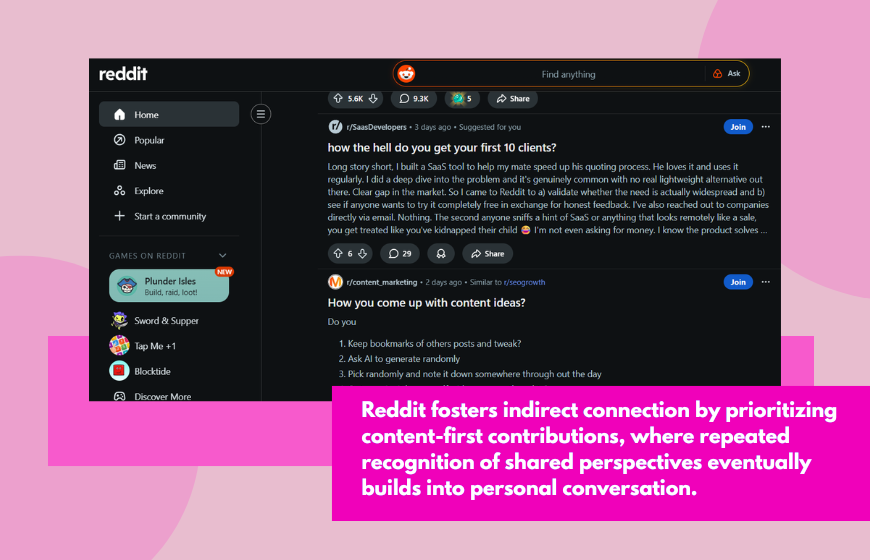
Reddit is not designed as a friendship app, yet it often functions as one over time.
Reddit — a network of topic-based communities called subreddits — allows users to participate in discussions centered on nearly any interest imaginable. Interaction is content-first, not profile-first.
That distinction changes how friendships form. You do not introduce yourself. You contribute.
Recognition builds slowly. Familiar usernames. Shared perspectives.
Then, sometimes, conversation moves beyond the thread.
8. Eventbrite
From Discovery to Real-Life Interaction
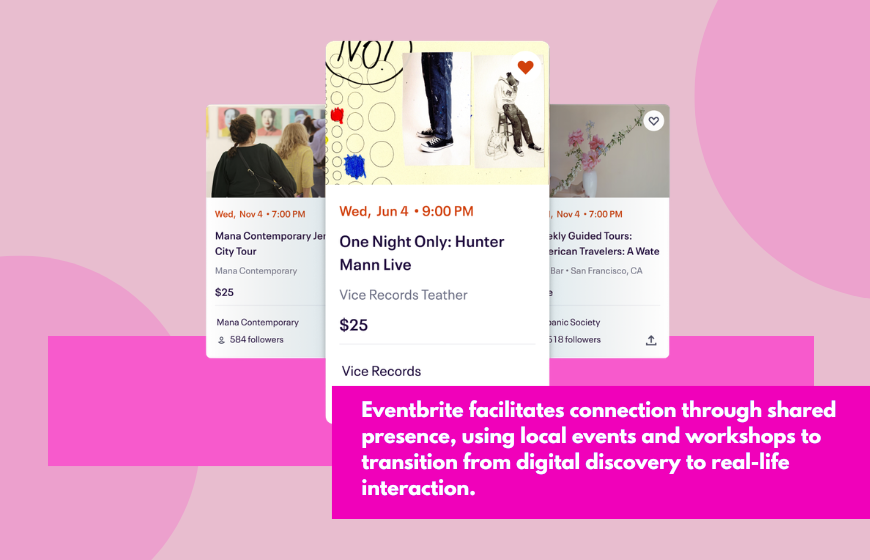
Eventbrite focuses less on conversation and more on presence. It helps users find events, then meet people through attendance.
Eventbrite — an event discovery platform — lists local and online gatherings, from workshops and talks to social mixers and hobby meetups. It connects people through shared experiences rather than direct messaging.
For many, that is easier. Talking feels more natural when there is a setting, a purpose, a shared moment.
You do not start online.
You show up.
Where You Should Start
Choosing a platform is less about popularity and more about entry point. What matters is how quickly you can start, how comfortable you feel, and whether the platform matches your social style.
Chatblink — often overlooked in curated lists — stands out for one reason: it removes hesitation. There is no long onboarding, no pressure to present yourself perfectly, and no algorithm shaping who you meet. You enter, you talk, you leave. Or you stay.
For beginners, that matters. Starting is the hardest step.
Still, Chatblink — while effective for breaking social inertia — is not designed for long-term structure. Conversations can be brief. Connections can disappear. It works best as a warm-up space, a place to practice interaction without stakes.
Then, transition.
Move toward platforms that support continuity. Meetup for in-person structure. Bumble For Friends for intentional matching. Discord or Geneva for sustained community. Each adds a layer Chatblink does not aim to provide.
Different tools. Different stages.
The most effective approach is not choosing one platform. It is sequencing them.
Start simple. Then build depth.

Connect Instantly with People Worldwide!
Join thousands of conversations happening right now. Chat anonymously and discover exciting chat rooms.
Making friends as an adult is rarely about opportunity. It is about friction.
Most platforms try to optimize connection through profiles, filters, and curated matches. Some succeed. Others overcomplicate what is, at its core, a simple act: starting a conversation.
That is where platforms like Chatblink remain relevant. They reduce the process to its most basic form. No expectations. No performance. Just interaction.
Yet lasting friendships usually require more. Repetition. Context. Shared experience over time.
That is why the strongest outcomes come from combining approaches. Use low-barrier platforms to begin. Use structured communities to continue. Use real-world interaction to solidify.
Different environments serve different roles.
The goal is not just to meet people.
It is to keep them.
FAQs
What is the best app to make friends online?
It depends on your style—Meetup for events, Chatblink for matching, and Discord for communities.
Are there apps specifically designed for friendship?
Yes, platforms like Bumble For Friends are built specifically for platonic connections.
Can you make real friends through chat platforms?
Yes, but they often work best as a starting point before moving to more structured platforms.
Which platform is best for meeting people locally?
Meetup and Eventbrite are ideal for finding nearby events and in-person interactions.
Is Discord good for making friends?
Yes, it builds friendships through shared communities and ongoing conversations.
How do you choose the right platform to make friends?
Choose based on your preference—casual chats, structured events, or community interaction.
Do online friendships usually last?
They can, especially when supported by consistency, shared activities, and deeper interaction.